The AI Agent ecosystem WISA and KODA, developed by FPT University students, support sales automation and cost optimization using AI applications.
From order management and inventory control to customer service and data analysis, small and medium-sized enterprises (SMEs) often have to handle many tasks simultaneously while having limited human resources and budgets. As artificial intelligence (AI) is increasingly applied to business operations, the challenge is not only how to leverage the technology but also how to control costs and evaluate its effectiveness.
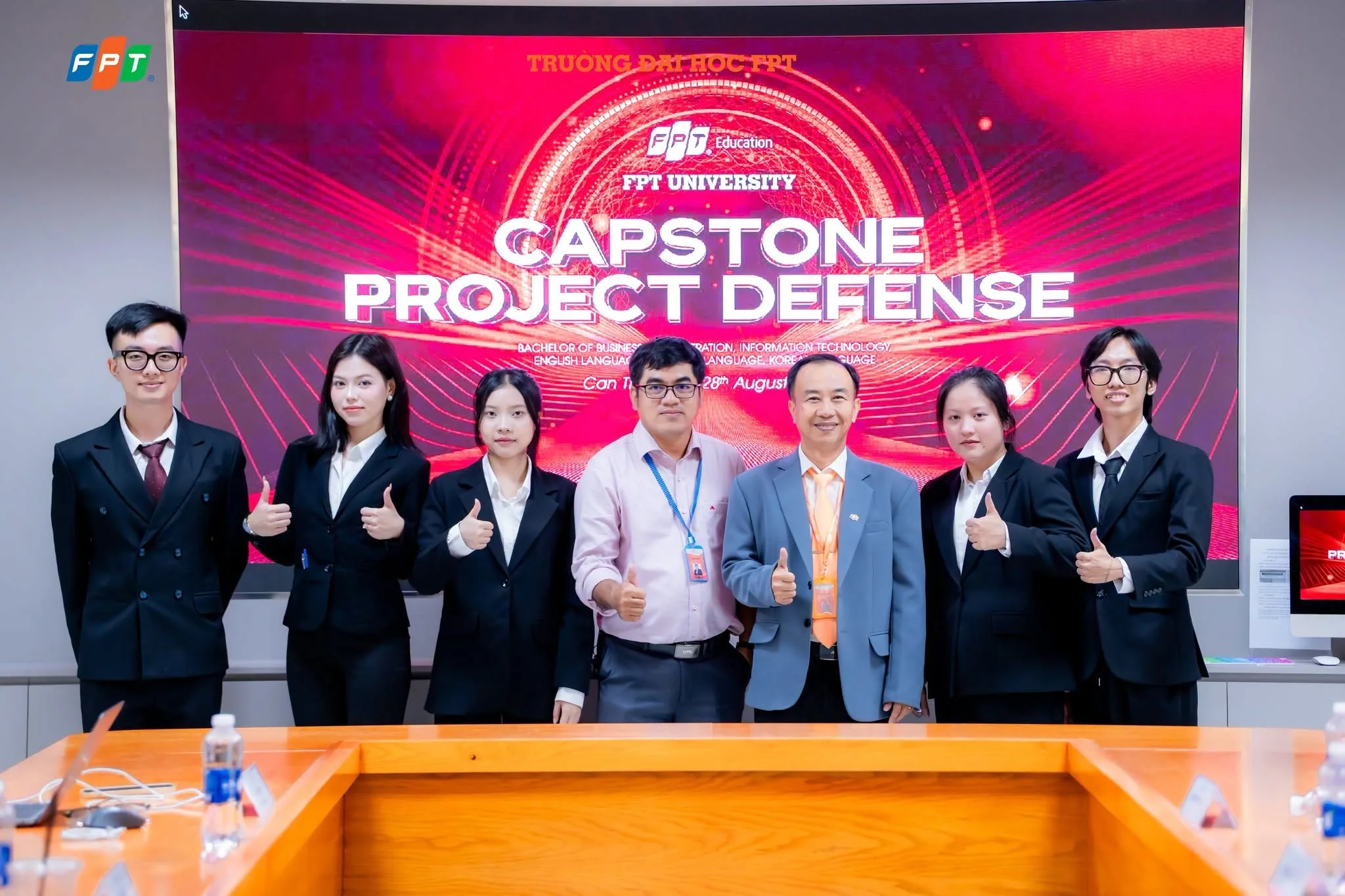
Driven by this need, a group of WINSELL students from FPT University developed an AI application platform to support sales process automation, while also building an AI Agent ecosystem comprising WISA and KODA. The solution aims to help small and medium-sized enterprises (SMEs) access AI more easily, optimize operations, and proactively control resources allocated to technology.
Notably, the project went beyond a mere graduation project. After product development, the team established WinSell Co., Ltd. to further refine and commercialize the solution. According to data provided by the team, the platform currently has over 200 shops using it and processes approximately 1,2 million messages per month.
From a sales problem to the idea of developing an AI Agent.
Behind the WINSELL project is a group of students including Truong Quoc Hung – Team Leader, Nguyen Thi Hong Thuong, Le Nguyen Xuan Ngan, Tram Huynh Duy Tan (Software Engineering K18) and Chau Cam Mo (Japanese Language K17).
During our research into the operations of small and medium-sized enterprises (SMEs), the team realized that sales are not simply about receiving orders and delivering products. Behind each transaction are many related tasks such as advising customers, updating inventory, synchronizing information across sales channels, and monitoring business performance.
If these tasks are handled individually or rely heavily on manual operations, businesses may struggle to manage data, track progress, and maintain customer service quality. This is the basis for the team's development of WinSell as a platform to support the automation of sales operations using AI.
However, the team didn't just focus on automation capabilities. Another issue raised was the cost of AI operation, especially when businesses use large language models to process a large volume of customer requests. Therefore, the solution was developed to integrate sales tools with an AI Agent ecosystem, while also emphasizing the ability to track resource consumption.
Automate multiple steps in the sales journey.
The WinSell solution is developed on two main layers. At the first layer, the platform focuses on supporting sales activities through a variety of integrated features.
Specifically, AI chatbots are capable of providing 24/7 customer support and feedback, helping businesses maintain customer service even outside of business hours. In addition, the system supports real-time inventory management and data synchronization, manages sales activities across multiple channels, and provides centralized data analysis.
Connecting functions within a single platform aims to reduce repetitive tasks, minimize errors during information updates, and support businesses in monitoring their operations more conveniently. Instead of constantly switching between multiple tools, users can manage related tasks on a unified system.
For businesses with limited staff, automating certain processes can save time and allocate resources more efficiently. This allows employees to focus more on tasks requiring direct interaction, in-depth consultation, or business decision-making.
The AI Agent ecosystems WISA and KODA target two groups of needs.
A notable aspect of WINSELL's development strategy is its AI Agent ecosystem, comprising WISA and KODA. Instead of building a single AI assistant for all purposes, the team developed two products tailored to different user needs.
WISA is positioned as a lightweight, multi-purpose AI assistant that supports everyday tasks with the goal of optimizing costs. The product targets common work needs, providing users with additional tools to assist in handling tasks without necessarily requiring resource-intensive solutions.
Meanwhile, KODA focuses more deeply on programming and engineering, serving the needs of developing and customizing technological solutions. This division of direction between the two AI Agents allows the ecosystem to reach a wider range of users and purposes.
This approach reflects a key perspective in AI applications: not every task requires the same tools or the same level of resources. By choosing the right solution for each task, businesses can be more proactive in balancing processing efficiency and operating costs.
Transparency in token costs when applying AI.
One of the differentiating factors that the WINSELL team focuses on is the transparency of token costs. In the process of using AI models, tokens are the unit used to calculate the amount of input and output data that the system processes. Token consumption is directly related to the cost of using certain AI services.
For businesses, without tracking resource consumption, implementing AI can become a difficult expense to assess, especially as customer interactions increase. Therefore, WinSell aims to provide detailed token consumption tracking capabilities, giving users more data to understand how much resources AI is using.
Based on this information, businesses can assess the suitability of each task, evaluate its effectiveness, and consider adjusting their AI deployment. This approach also helps SMEs not only access technology but also manage costs during operations.
From student projects to technology companies
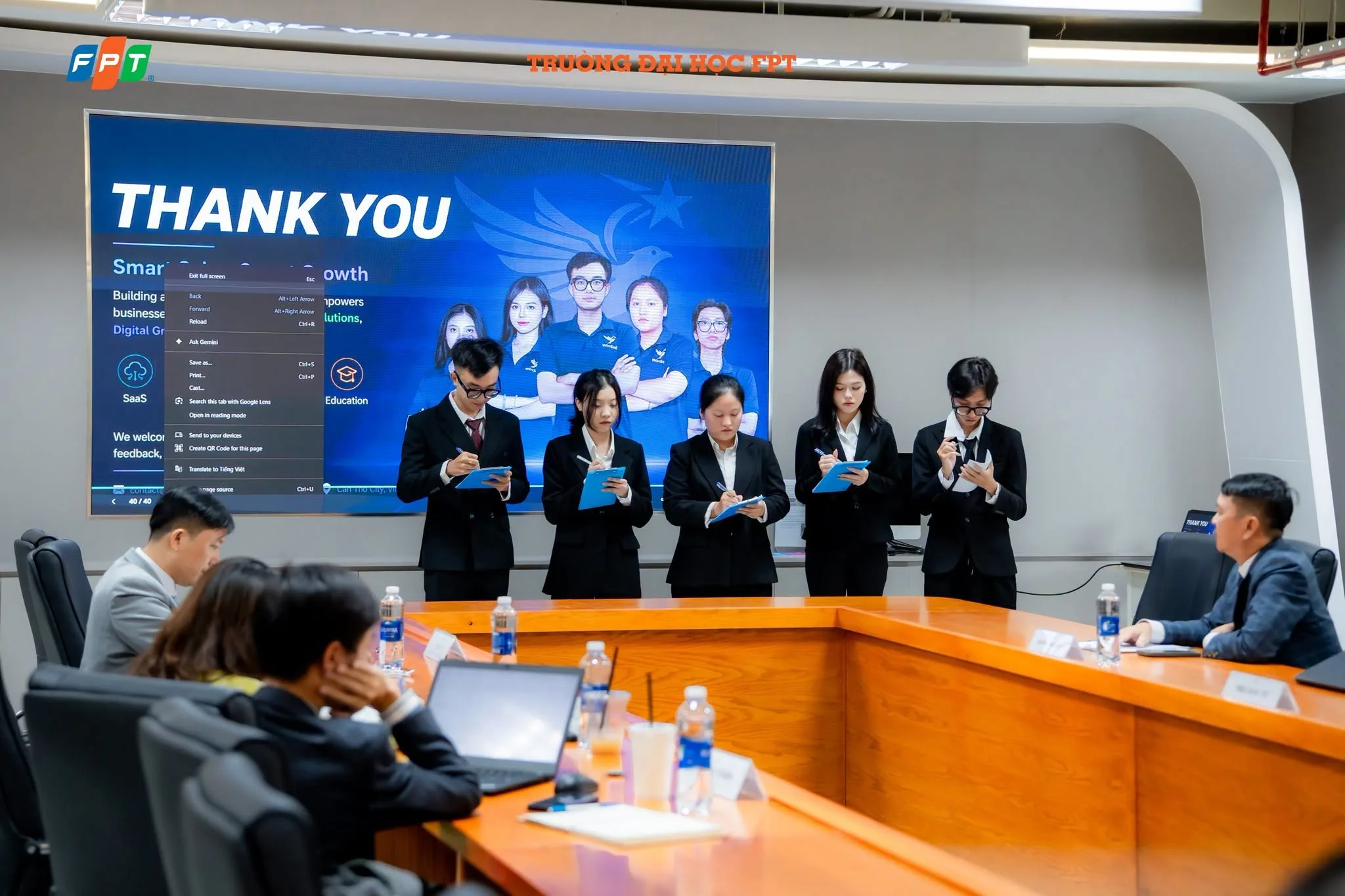
For the WINSELL team, defending their project wasn't the final milestone. After researching and developing the product, the members established WinSell Co., Ltd. to continue bringing the solution to market.
According to data provided by the team, the platform currently has over 200 shops using it and processing approximately 1,2 million messages per month. These figures indicate that the product has entered an operational phase with real-world interaction, while also opening up new demands for system scalability, user experience quality, and AI processing efficiency.
As the number of users and messages increases, the team needs to continue focusing on platform stability, the ability to meet diverse needs, and resource optimization. These are different challenges from building a product in an academic environment, requiring the team to continuously listen to feedback and improve the solution.
The transition from project-based learning to business-oriented work also gives team members the opportunity to experience many aspects of the product development process, from technology research and system building to operation and customer engagement. Through this, professional knowledge is placed within a real-world business context, where the product's effectiveness needs to be evaluated through its ability to address user needs.
Aiming to expand the AI ecosystem for small and medium-sized enterprises.
In the coming period, WinSell aims to expand its user base, reach more small and medium-sized enterprises nationwide, while continuing to optimize its AI system, develop in-depth analytical features, and perfect the WISA – KODA ecosystem.
In addition to product development, the team also collaborates with student startup programs like FProSelling and provides customized software development services for businesses requiring in-depth customization. These directions have helped WinSell expand its operations from a sales support platform to offering additional technology solutions tailored to specific needs.
With SMEs as its target audience, a key objective of the project is to help businesses gradually access AI without facing significant barriers in terms of personnel, technology, and budget. Combining sales process automation, data management, and AI agents can provide businesses with additional options during their digital transformation.
From the code of a project to a platform used by over 200 shops and processing approximately 1,2 million messages per month, WINSELL demonstrates that the student product development journey can continue after the presentation. With the WISA and KODA AI Agent ecosystem, the team aims to solve a practical problem: integrating AI into the right jobs, meeting the right needs, and within the resource management capabilities of businesses.
The project also demonstrates the proactive research, innovation, and entrepreneurial spirit of FPT University students, as technological knowledge is applied to develop products that meet the real needs of the market.