
FPT University, as an institution, continues to implement its Green Transportation Policy with concrete actions across all of its campuses in Hanoi, Ho Chi Minh City, Da Nang, Can Tho and Quy Nhon, making sustainable commuting the easiest and most affordable choice for students, lecturers and staff. The university’s approach combines three pillars: (1) bringing high-quality public and shared transport to the campus gate, (2) making walking, cycling and electric mobility convenient on and around campus, and (3) reducing the need to travel by offering affordable housing close to campus.
Free and subsidised public and shared transport
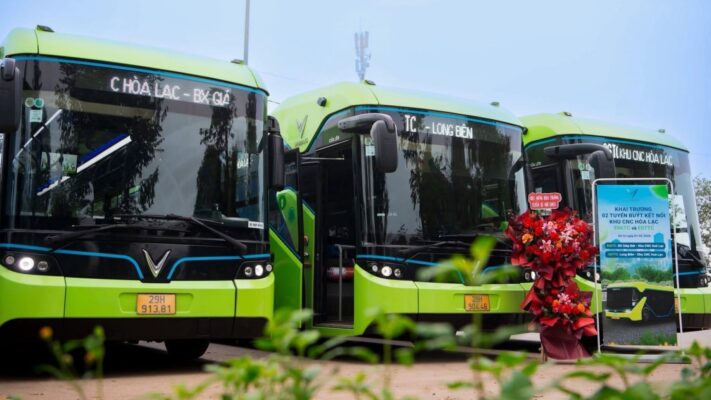
- New electric bus routes to campuses: The university works with city authorities and operators to bring zero-emission public transport closer to its campuses. For example, since 1 March 2026 two new VinBus electric bus routes (E06TC and E07TC) connect central Hanoi with Hoa Lac Hi-Tech Park, where the Hanoi campus is located, at an affordable price of VND 20,000 per trip.
- University shuttle buses: FPT University continues to operate and expand shuttle bus services connecting its campuses with major public transport hubs in Hanoi, Ho Chi Minh City and other cities. In 2024, four new daily shuttle routes were added; in 2025–2026 the network was further extended to link with city bus interchanges and urban railway (metro) stations, so that students and staff can complete their journey on public transport.
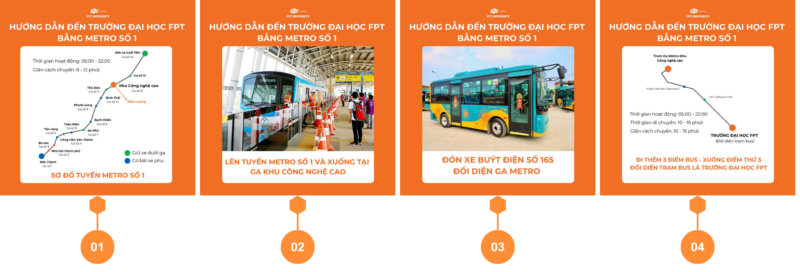
- Free or reduced-price transit passes: The university supports students in purchasing monthly public transport passes (bus and metro). Students are also guided to register for the discounted student monthly passes offered by the public transport systems of each city.
- Working with transport authorities and operators: FPT University works with city transport authorities, the management boards of the hi-tech parks and urban areas where its campuses are located, and public bus operators to propose new routes, stops and timetables tailored to the travel patterns of students, lecturers and staff.
Car pooling, ride sharing and car sharing
- Car pool / van pool and ride-sharing programme: The university encourages staff and lecturers who live in the same areas to travel together. Car-pool groups are organised through internal communication channels, and student ride-sharing (shared motorbike and car trips) is promoted through official student fanpages and clubs.
- Preferential parking for car-pool users: Car-pool vehicles are given priority parking spaces close to the main buildings, encouraging staff to share journeys instead of driving alone.
- Car sharing: Staff and students are encouraged to use app-based electric car and electric motorbike services (such as Xanh SM) instead of owning or driving private petrol vehicles for occasional trips.
Electric vehicles and low-emission mobility
- EV purchase support: Through partnerships with Xanh SM/VinFast and other electric vehicle companies, FPT University offers special financial packages for staff and lecturers purchasing electric cars or motorbikes: a 4% discount plus an additional 4% university support package in 2025.
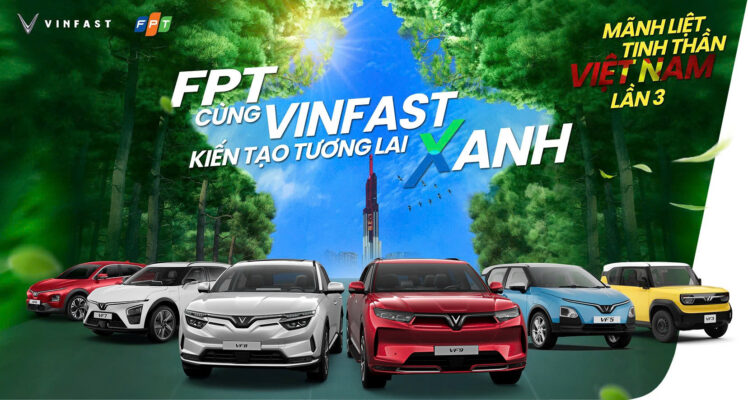
- Interest subsidy: The university provides a 100% interest rate subsidy for one year for staff and lecturers purchasing electric cars.
- EV charging stations: Under partnership agreements with charging providers, electric vehicle charging stations for cars and electric motorbikes have been installed across campuses to meet the daily needs of students, lecturers and staff.
Cycling and walking
- Bicycle and pedestrian policy: FPT University campuses are designed as green, walkable campuses. The university’s Green Transportation Policy gives priority to pedestrians and cyclists inside its campuses, with shaded walkways, internal roads with low speed limits, and safe connections between lecture buildings, dormitories, sports facilities and nearby housing areas
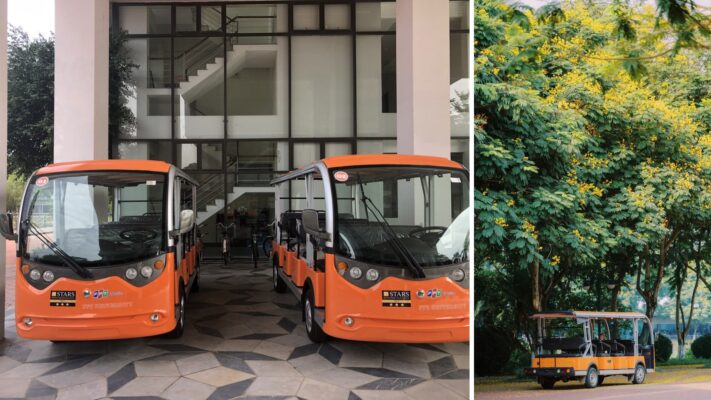
- Bicycle sharing programme: The university provides shared, free-to-use bicycles and electric bicycles on campus and in nearby residential areas, allowing students to move between classes, dormitories and nearby bus stops without using motorbikes.
- Bicycle parking and storage: Free bicycle parking areas are available at the dormitories and main academic buildings, including covered parking and storage for shared bicycles and e-bikes.
Reducing the need to commute: affordable housing near campus
- FPT University continues to expand its dormitories at all campuses with a range of options. Dormitory rent remains around 50% below market rates, so that students can live within walking or cycling distance of their classes.
- The university has established a housing network to help students find affordable accommodation near campus, reducing daily travel distances.