
FPT University builds on previously developed land wherever possible
FPT University (FPTU) builds on brownfield and previously developed land wherever possible. This is a standing principle of campus development, applied by the FPT Education Construction Department and approved by the FPT Education Board for every new building and every new campus.
In practice this means three things:
- Reuse first. Before building anything new, we renovate, retrofit or extend buildings we already have.
- Build inside what is already developed. New buildings are placed on land inside our existing campuses, or on land already cleared, serviced and zoned for development by the authorities (hi-tech parks, industrial zones, planned urban areas).
- Greenfield only as a last resort. Undeveloped land is used only when no suitable developed site exists, and then with strict green-space and water-management conditions.
Our policy: a four-step site-selection process
Every campus project at FPTU must pass through the same four steps, in order. A project moves to the next step only when the previous one cannot meet the need.
- Reuse and retrofit existing buildings. Can the need be met by renovating, re-purposing or extending a building FPTU already uses?
- Infill on existing campus land. Can a new building go on land inside an existing FPTU campus, such as a car park, temporary structure or under-used plot?
- Previously developed or planned and serviced land. If a new site is needed, it must first be sought on land that was previously built on, used for production, or already cleared, levelled and connected to roads, power and water inside a hi-tech park, industrial zone or urban area under a Government-approved master plan.
- Greenfield, only as a last resort. Undeveloped land is considered only when steps 1–3 offer no suitable site. The project must then justify the choice to the Board and meet extra conditions (below).
When step 4 is unavoidable, the project must:
- keep at least [x]% of the site as green space and water bodies;
- retain and replant native trees, and avoid filling natural wetlands and water channels where possible;
- connect to existing public roads and utilities rather than building new standalone infrastructure.
How each campus grew on previously developed land
From the start, the FPT Education Construction Department and the FPT Education leadership looked for campus land that was already planned and serviced for development, and began teaching in existing buildings while permanent campuses were prepared. Today FPTU operates five campuses, from Hanoi in the North to Can Tho in the South.
Hanoi – from city buildings to Hoa Lac Hi-Tech Park
In its first years, FPTU taught in existing buildings in central Hanoi rather than building a new campus straight away. The permanent campus was then built in Hoa Lac Hi-Tech Park, at Km29 Thang Long Boulevard, Thach That, about 30–35 km from the city centre. The site had already been designated by the Government as an industrial and hi-tech park and serviced by the Park’s Management Board. FPTU, together with FPT Corporation, chose to build here to train future technology engineers, and many large corporations have since invested in the same park.
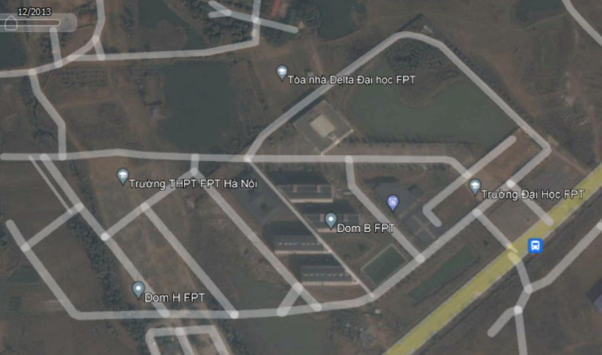
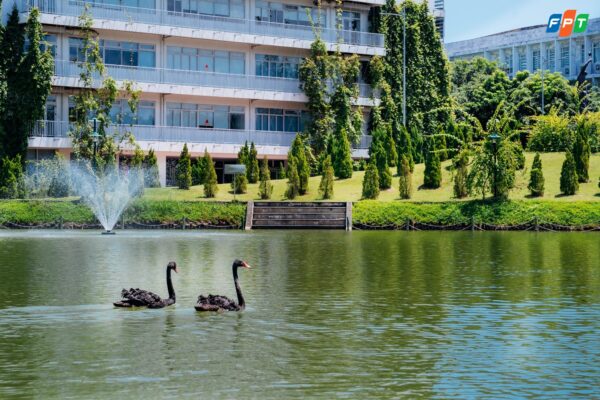
Since the first building opened, every expansion has stayed inside the original campus boundary. The seven-storey Alpha (Administrative) Building, with 11,065 m² of usable floor area, was followed by the Beta, Gamma and Delta blocks and the student dormitories, all on land within the existing site. Careful planning of green spaces, linked buildings and water bodies has turned the site into a green campus, and the Alpha Building’s design won an award at the 42nd World Architecture Awards.
Ho Chi Minh City – from Quang Trung Software Park to Saigon Hi-Tech Park
FPTU Ho Chi Minh City first operated in an existing building in Quang Trung Software Park. It then moved to its permanent campus in Saigon Hi-Tech Park, Thu Duc City, on a 22,500 m² plot. By the time FPTU received the plot, the Saigon Hi-Tech Park Management Board, under the Ho Chi Minh City People’s Committee, had already cleared and levelled it and connected it to roads, power and water.
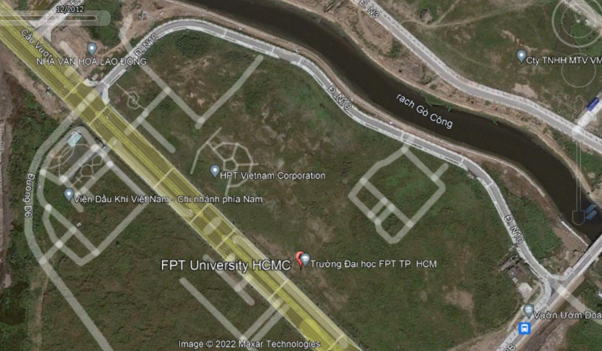
On this compact urban plot, the design keeps green space by going up rather than out: nine curved blocks, each topped with a rooftop garden, resemble nine green hills among the city’s high-rise buildings.
Da Nang – a campus inside a planned urban area
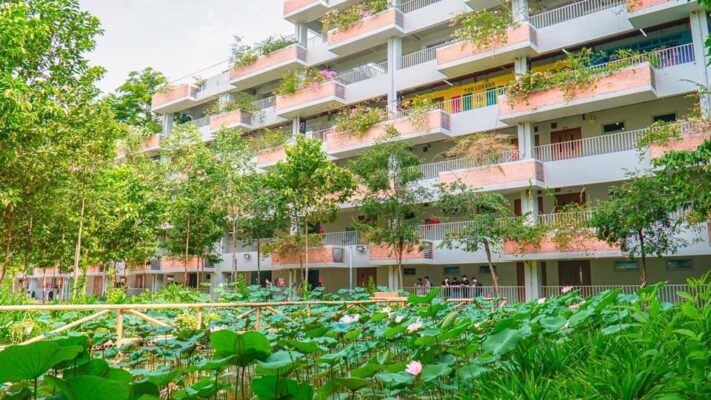
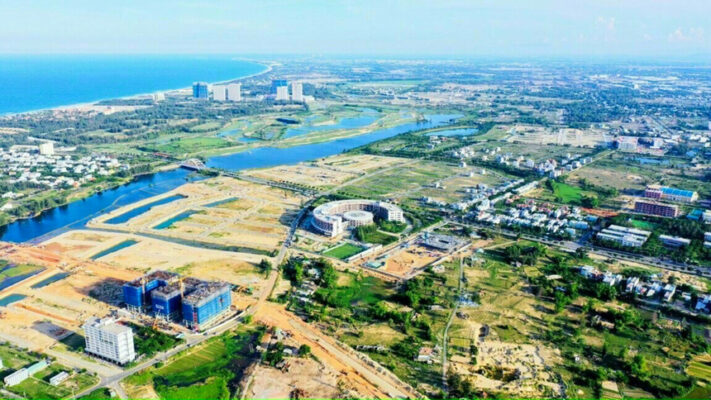
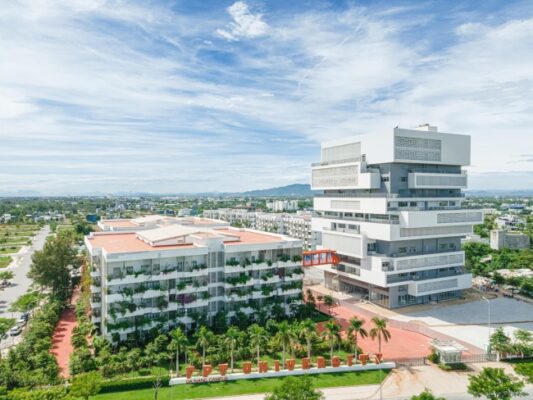
FPTU Da Nang began in rented, existing buildings in the city before moving to its own 5.1-hectare campus in the FPT City urban area, in the south of Da Nang. FPT City was planned as an urban area with roads, power and water already in place, so the campus needed no new standalone infrastructure. Its design, inspired by stacked books, gives teachers and students a green and memorable place to teach and learn, and new blocks have since been added inside the same campus.
Can Tho – an urban site in the Mekong Delta
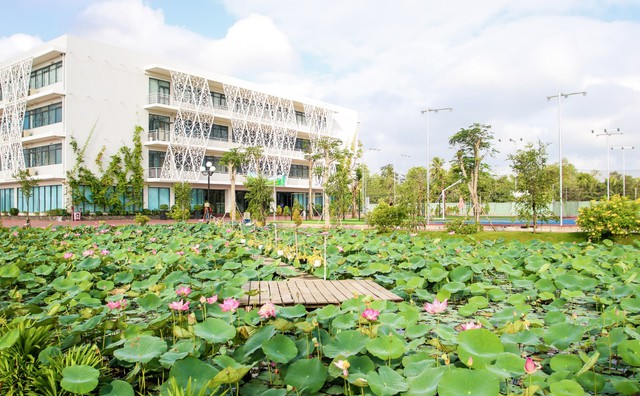
FPTU Can Tho also began in rented, existing buildings in the city. Its permanent campus at 600 Nguyen Van Cu (extended), An Binh Ward, Ninh Kieu District, sits on urban land served by an existing arterial road. Designed by a renowned French architecture firm, it has become an architectural landmark in the Mekong Delta and accommodates more than 5,000 students. New blocks have since been added inside the campus.
Quy Nhon – building within the City’s plan for an AI centre
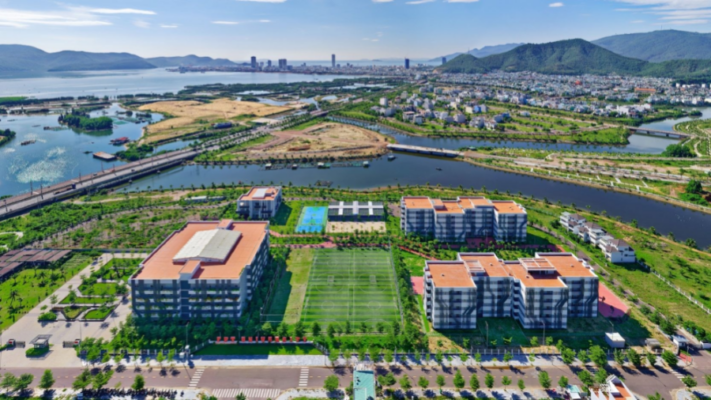
Quy Nhon, in Binh Dinh province, aims to become Vietnam’s largest artificial intelligence centre. FPTU built its fifth campus beside Thi Nai Lagoon and the Quy Nhon Bay seaport, on land that Quy Nhon City had already reclaimed and re-planned as a new urban and AI zone. FPTU built within the City’s plan rather than opening up land of its own, and after three years of construction the campus now overlooks Quy Nhon Bay.
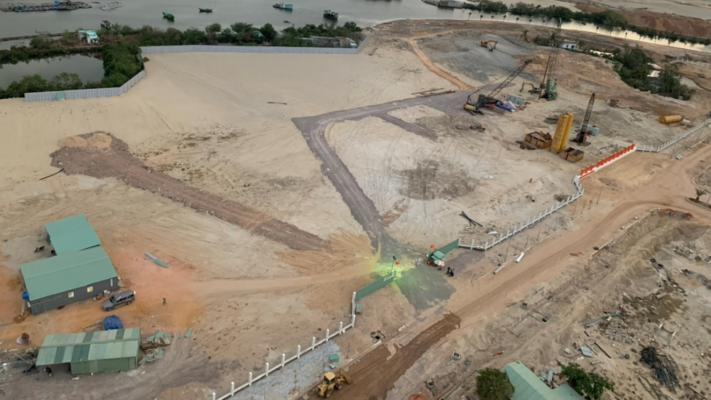
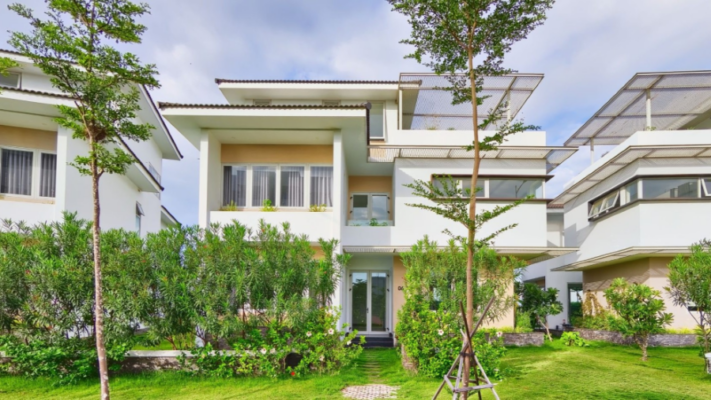
The same planned zone also provides housing. Young single lecturers who move to Quy Nhon receive free housing on campus during their teaching tenure. Next to the campus, Quy Nhon City People’s Committee and FPTU planned the An Phu Thinh affordable housing area, where lecturers and FPT staff can buy homes about 30% below market price. A new urban area is growing around the campus, on land already planned for it.
Reusing existing buildings across FPT Education
Reusing existing buildings is how FPTU and its sister schools usually enter a new city, and how they keep growing without new land.
- Starting in existing buildings. FPTU Hanoi, Ho Chi Minh City, Da Nang and Can Tho all began teaching in existing or rented buildings. Each moved to a permanent campus only once student numbers justified it.
- Sister schools in existing city buildings. FPT Polytechnic, Greenwich Vietnam and Swinburne Vietnam, all part of FPT Education, run many of their campuses in existing buildings in city centres, renovated for teaching, rather than in new construction.
- Infill inside existing campuses. New teaching blocks, dormitories and sports facilities go on under-used land inside campuses we already have, such as the Beta, Gamma and Delta blocks at Hoa Lac.
- Renovation and re-purposing. Older rooms are converted into labs, studios, libraries and co-working spaces instead of building new ones.