Remember your first days at our university? Right in orientation week, every new FPTU student is introduced to an idea that stays with them throughout university life: the United Nations Sustainable Development Goals (SDGs). It is not a token lecture, it is the first step in FPT University’s commitment that sustainability education must be meaningful, relevant and for all students.
1. A university-wide commitment: FPT University’s Sustainable Development Policy and Time Higher Education (THE) Impact Ratings – six submissions, five consecutive rises in rank
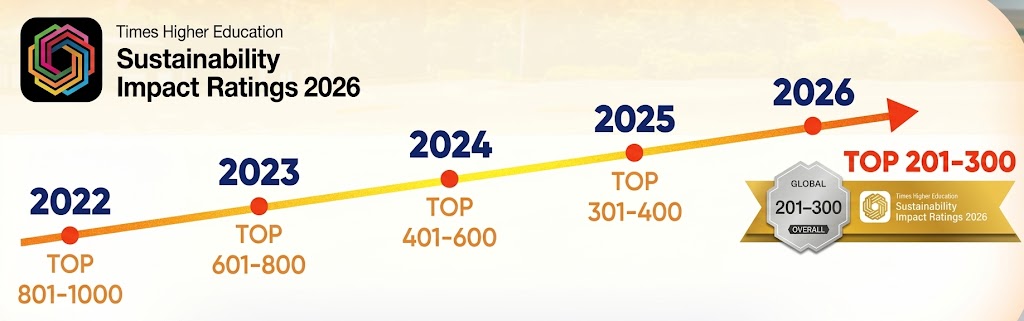
FPT University has issued its Sustainable Development Policy, a comprehensive document of 9 chapters and more than 40 articles, as a statement and commitment tied to its mission, guiding how the whole university contributes to the Sustainable Development Goals. That commitment is backed by action: 2026 is the sixth year the university has submitted to the THE Impact Rankings, a whole-university effort involving leadership, faculty, staff and students. Across the five editions with published results, its standing has risen steadily: from the global top 1000 to the top 300.
2. Mandatory education for all students: the OTP101 orientation programme
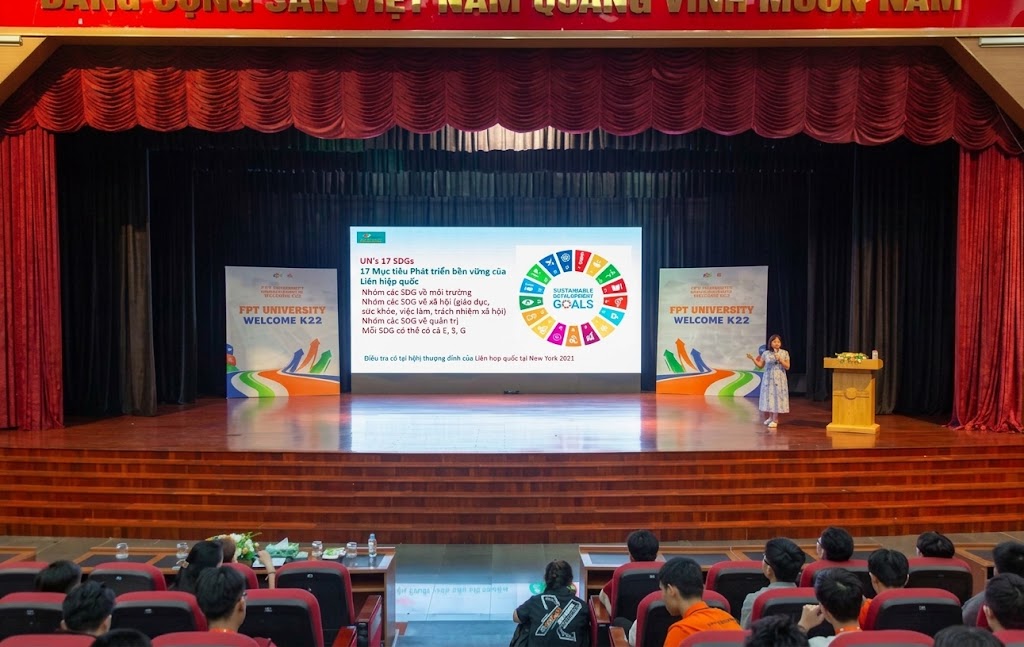
To make “for every student” real rather than just a phrase, SDG content is built into the official orientation course OTP101 – a module taken by all new students. For the past five years, every incoming cohort has met the Sustainable Development Goals from the very start, understanding why what they are about to study connects to the shared challenges of society and the world.
3. Integrated SDGs across the full curriculum of every programme
Beyond orientation week, Article 35, Chapter 8 of FPT University’s Sustainable Development Policy sets a clear principle: the Sustainable Development Goals must be integrated into the curricula of all programmes and 25% subject. Whether you study IT, business, languages or design, your learning journey is designed to connect with the SDGs in a way that fits your field. This is a university-wide policy, not the initiative of a single faculty.
4. Optional education for all students: electives, clubs and community projects
Beyond the compulsory and integrated parts, every FPTU student can ACTIVELY CHOOSE to go deeper into sustainability by interest. Among electives, students may select SDG-linked courses that suit their career path (optional courses/projects in technology, sustainable business, language–pedagogy and more). Outside class, clubs and community projects are voluntary channels open to all students: they sign up to take part, applying disciplinary knowledge to real local problems and to groups who need support. These options give every student, whatever their major, an optional pathway to deepen and practise the SDGs – and through each activity, students learn that the SDGs are not just 17 coloured squares on a poster, but concrete changes they can make.
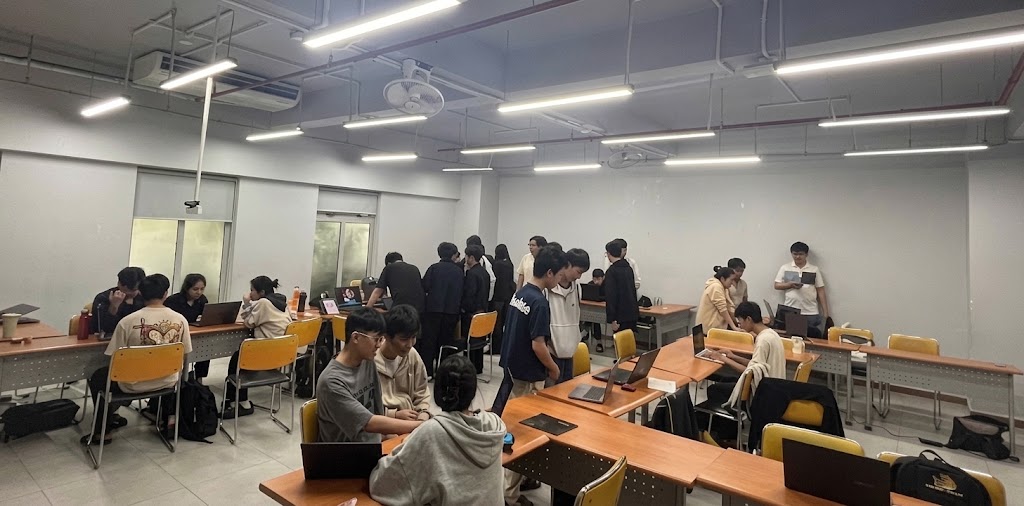
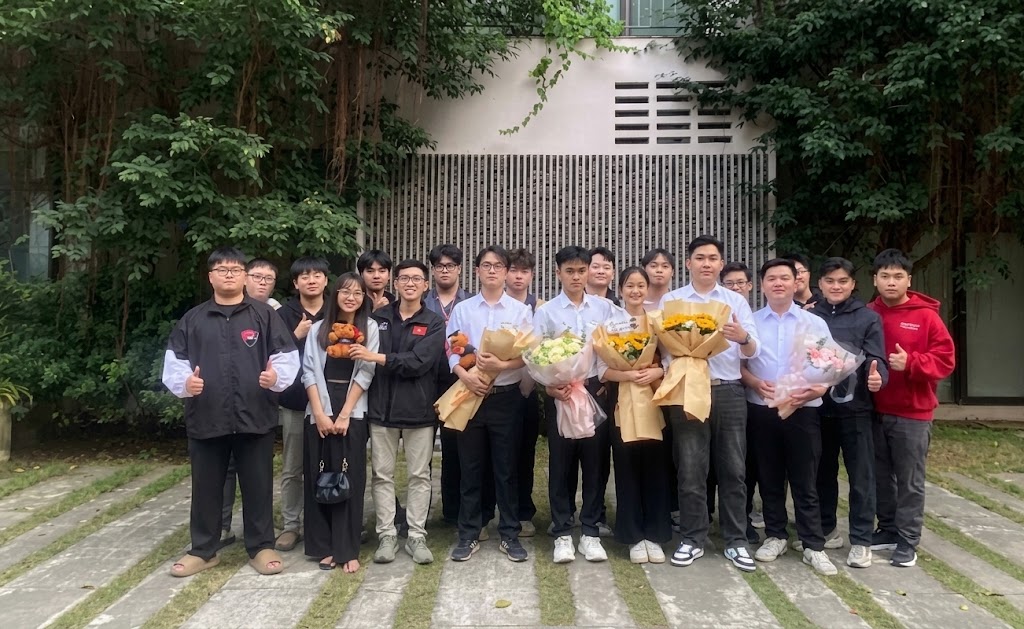
Addressing the real-world challenge posed by the rising frequency and increasing sophistication of cyberattacks, a team of five students majoring in Information Security at FPT University Hanoi undertook a project titled “Information Security Assessment & Penetration Testing for Telecom Company Applications (Sep – Dec 2025),” which focuses on conducting information security assessments and penetration testing for the CRM application of a telecommunications company. information security assessments and penetration testing for the CRM application of a telecommunications company.
Conclusion: FPT University – every student a citizen of sustainable development
From an institution-level policy, an orientation course for every new student and the curriculum of each programme to community projects, FPT University builds a learning journey in which sustainability is not an “extra” subject but part of becoming an FPTU graduate. Learning to excel in a profession – and learning to help build a sustainable future.