How do we know whether students truly live out sustainability? Our university chose the most honest way: to MEASURE it. Every year, the university runs a university-wide survey mapped to the UN’s 17 Sustainable Development Goals (SDGs), with one question per goal, to count how many student actions genuinely serve each goal. This annual survey lets the university see clearly which SDGs students are most active on and which remain ‘thin’ so they can be reinforced in time.
1. A real measurement tool: a university-wide survey on the 17 SDGs
An annual (June-to-June) survey of the entire student body is conducted using the FE-survey tool integrated into the FAP academic management system. Because it uses the same 17 questions repeated every year, the university has a stable MEASURE to track over time, something a single course gradebook cannot do. This is precisely the spirit of the SDGs: going beyond merely teaching and learning about them to having tools for measurement and knowing how to use that data to drive more effective impact.
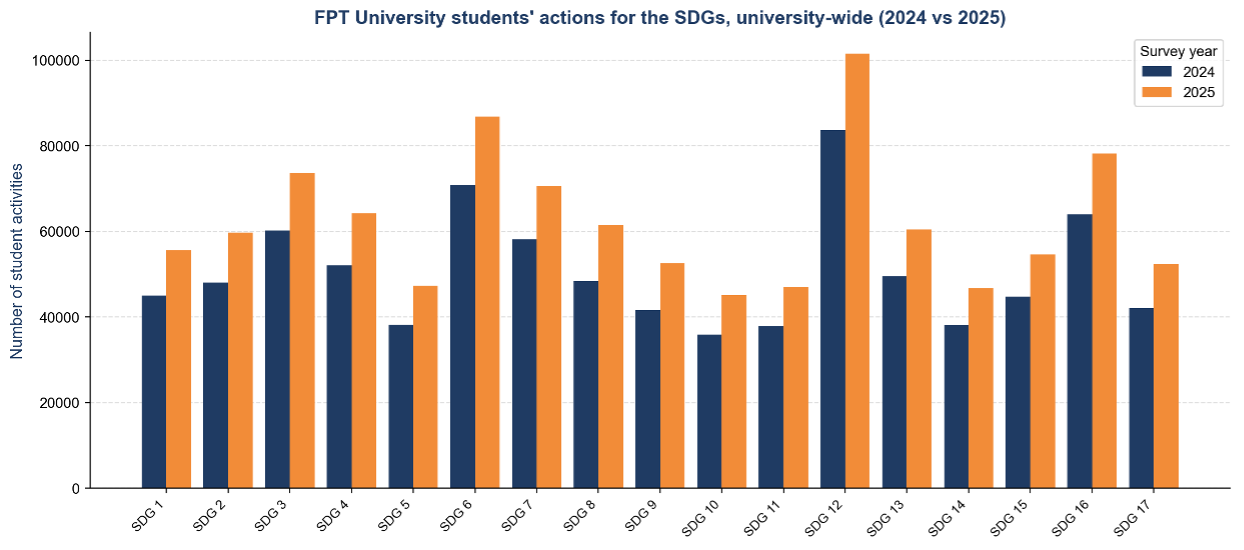
Table 1. FPT University student activities for each SDG, 2024 vs 2025 (university-wide survey)
| SDG | Goal | 2024 | 2025 | Change |
| 1 | No Poverty | 44,945 | 55,558 | +24% |
| 2 | Zero Hunger | 48,027 | 59,654 | +24% |
| 3 | Good Health and Well-being | 60,166 | 73,744 | +23% |
| 4 | Quality Education | 52,022 | 64,238 | +23% |
| 5 | Gender Equality | 38,223 | 47,334 | +24% |
| 6 | Clean Water and Sanitation | 70,825 | 86,808 | +23% |
| 7 | Affordable and Clean Energy | 58,169 | 70,593 | +21% |
| 8 | Decent Work and Economic Growth | 48,448 | 61,579 | +27% |
| 9 | Industry, Innovation and Infrastructure | 41,620 | 52,554 | +26% |
| 10 | Reduced Inequalities | 35,886 | 45,101 | +26% |
| 11 | Sustainable Cities and Communities | 37,792 | 46,940 | +24% |
| 12 | Responsible Consumption and Production | 83,595 | 101,464 | +21% |
| 13 | Climate Action | 49,510 | 60,421 | +22% |
| 14 | Life Below Water | 38,032 | 46,700 | +23% |
| 15 | Life on Land | 44,761 | 54,596 | +22% |
| 16 | Peace, Justice and Strong Institutions | 63,898 | 78,157 | +22% |
| 17 | Partnerships for the Goals | 42,096 | 52,370 | +24% |
| Total | All 17 goals | 858,015 | 1,057,811 | +23% |
The results show a positive and even trend: total SDG actions rose about 23% in a single year (from roughly 858,000 in 2024 to about 1,057,800 in 2025), and encouragingly ALL 17 goals increased, with none going backwards. This indicates that the sustainable-living movement among students is spreading on every front, not just a few familiar themes.
2. The SDGs students are most active on
In both years, SDG 12 – Responsible Consumption and Production leads (rising from over 83,500 to more than 101,000), reflecting the spread of green living and waste reduction among students. Next come SDG 6 – Clean Water and Sanitation, SDG 16 – Peace, Justice and Strong Institutions, SDG 3 – Good Health and Well-being, and SDG 7 – Affordable and Clean Energy. This group shows our students are especially engaged with green living, community health and civic–institutional values.
3. The goals that need more education and activities
The measurement also reveals gaps worth attention: the least active goals are SDG 10 – Reduced Inequalities, SDG 11 – Sustainable Cities and Communities, SDG 14 – Life Below Water, and SDG 5 – Gender Equality. Although these too grew year-on-year, their activity levels remain below the overall average. This is not a demerit but valuable information for the university to act on: adding seminars, clubs, community projects and course content on equality, sustainable cities and ocean protection.
It is precisely because there are measurement data that the university knows where to “push” SDG education next year – the real value of a good measurement tool.
4. Measuring through the capstone: when sustainability competence becomes an ESG startup
Beyond the quantitative survey, our university also measures sustainability competence through students’ own graduation products. In August 2025, an interdisciplinary student team defended the project “ESG Coach & Practice – accompanying small and medium enterprises in the Mekong Delta on their sustainability journey”. The team won VND 50 million of investment from the university, took first prize “The Best Sell” for distributing green products, directly coached 3 real businesses on ESG, connected with 13+ experts and 10 ESG enterprises, built the 3Green.vn website with an AI chatbot and e-commerce, and reached a community of over 15,720.
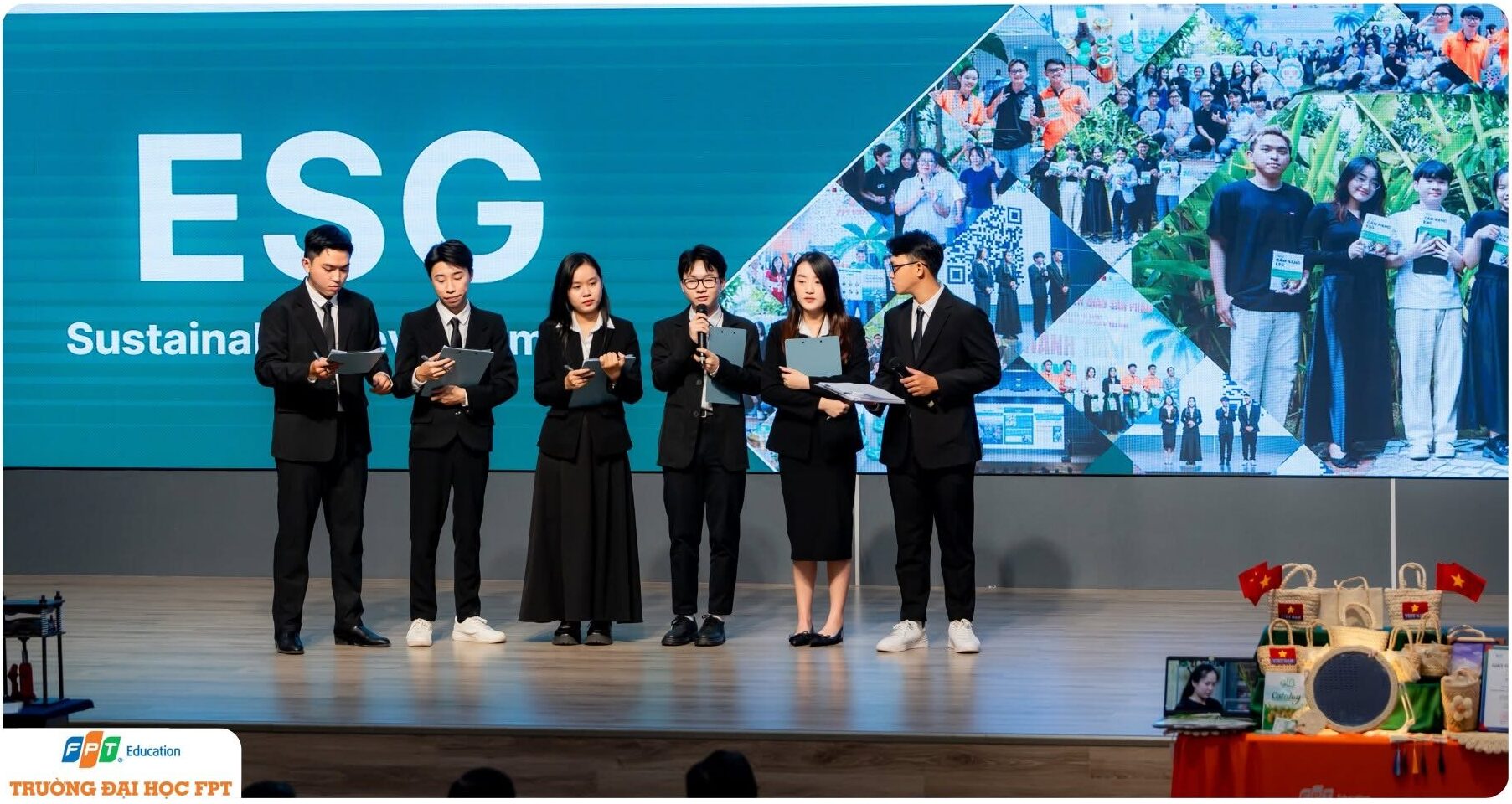
The team presented and defended entirely in English before a panel including reviewing lecturers and business representatives. A capstone assessed by a panel and businesses, with clear criteria and outcomes, is itself a way to MEASURE students’ ability to apply sustainability knowledge in practice, complementing the quantitative picture from the survey above.
There are many other FPTU student projects, research topics, and graduation projects focused on sustainable development and aligned with one or more SDGs.
Conclusion: measure to understand, understand to improve.
Through an annual 17-SDG survey and panel-assessed startup capstones, FPT University does not merely teach sustainability – it MEASURES how far students understand and act. When SDG action rises across all 17 goals in a single year, the numbers show that sustainability is becoming a genuine student competence; and by knowing which goals lag, the university can add education to make the picture ever more balanced.