Good policy needs real-world data and insider perspectives. As a technology university with campuses across Vietnam. The University possesses a dynamic leadership team that actively contributes policy recommendations to government agencies and the National Assembly, thereby establishing a strong reputation within society. FPT University is regularly invited to policy forums and seminars where government listens to experts and institutions before refining regulations. This past year we contributed on two hot topics: education management after the two-tier local government reform, and ethics and responsibility in using AI.
Policy dialogue with the Ministry of Education and Training and the National Assembly’s Committee on Culture and Society on commune-level education
On 2 August 2025, the Ministry of Education and Training and the National Assembly’s Committee on Culture and Society held a seminar on organising and managing commune-level education after local government restructuring, co-chaired by the Committee Chair and the Minister. Participants included Committee and Ministry leaders, provincial education departments, commune-level education managers, experts, scientists and relevant organisations. The aim was to hear grassroots challenges and promptly adjust policy before the new school year.
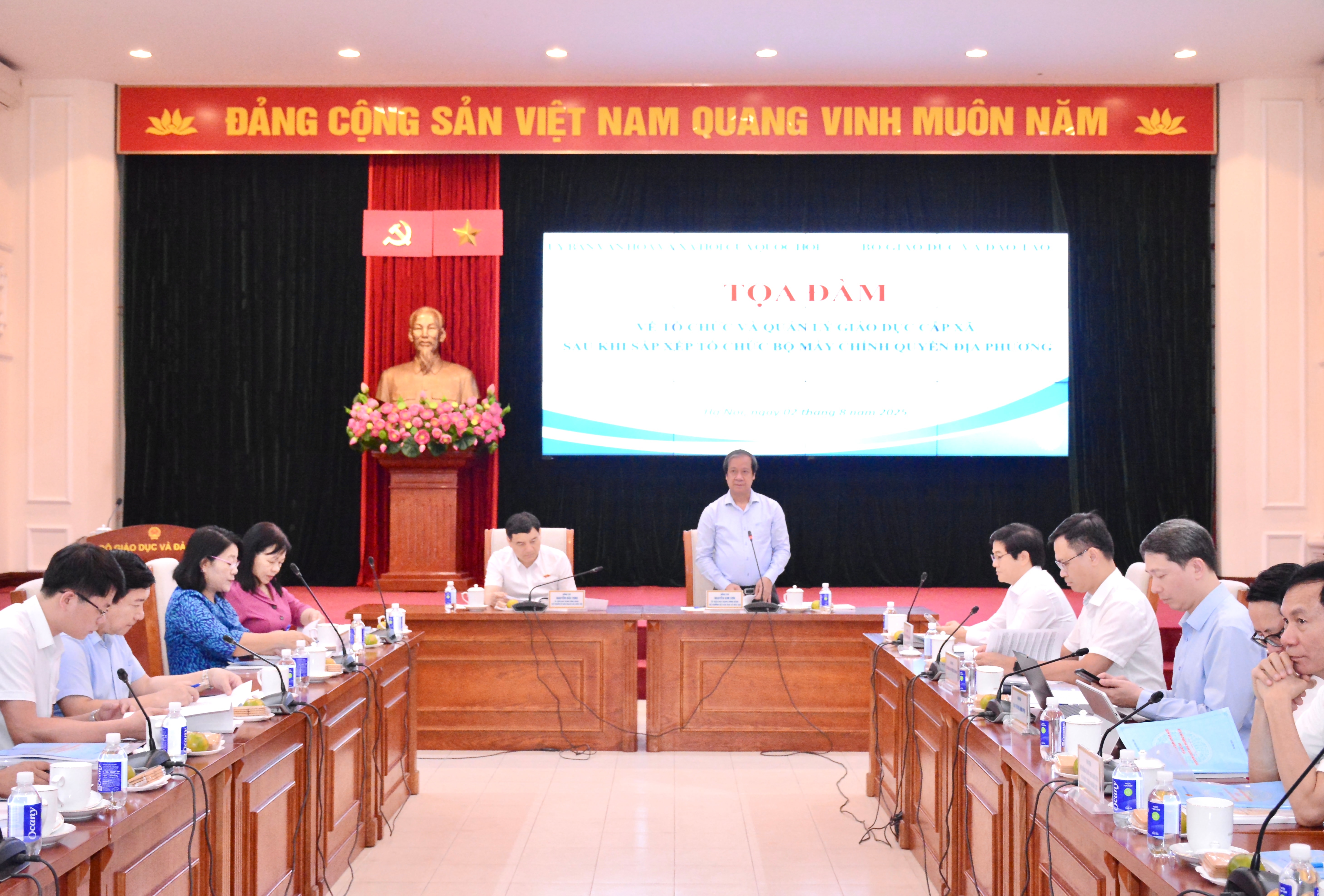
The seminar on organising and managing commune-level education of MOET.
FPT University representatives took part in the seminar, bringing the perspective of an institution experienced in digital governance and in running schools across many localities. Such input gives government additional evidence and practical experience as it refines guidance for the two-tier model.
Policy recommendations on ethics and responsibility in using AI in higher education
With the AI Law in force from 1 March 2026, AI ethics in universities has become urgent. At the Nikkei Digital Forum in Asia 2026, the Chair of the FPT University Council argued that learners need an “AI First” mindset, but that AI use must go hand in hand with responsibility to oneself, the community and society. Universities should therefore move from transmitting knowledge to building holistic learning environments that develop judgement and value-based decision-making.

The Chair of the FPT University Council at the Nikkei Digital Forum in Asia 2026.
Notably, he called on regulators to keep refining rules and policies suited to each stage of technological development, so AI is applied safely, effectively and sustainably, combining three pillars: technology education, ethical awareness and a sound policy framework. It is a policy perspective drawn from our university’s own AI education practice.
Policy research: strategic stakeholder analysis for Vietnam’s carbon credit system
Beyond dialogue, our university conducts research that directly serves policy-making. In 2025, Nguyen PH with five researchers from the Research Center of Applied Sciences, Faculty of Business, FPT University (Hanoi) published “Strategic stakeholder analysis for Vietnam’s carbon credit system: a neutrosophic approach” in the Journal of Open Innovation: Technology, Market, and Complexity (Elsevier, Scopus-indexed, vol. 11, issue 3, article 100597).
Vietnam has pledged net zero by 2050 and is in the early stages of building a carbon credit market that remains fragmented, with price gaps, low liquidity and inconsistent verification standards. Using neutrosophic Delphi and DEMATEL methods to synthesise expert views, the study identifies the key factors, regulatory transparency, price stability and cross-border certification, and highlights the role of the private sector and financial institutions and the need for incentives and risk mitigation. It offers structured recommendations for policymakers to build a transparent, efficient carbon credit system aligned with global carbon pricing.
Toward policy research co-produced with government.
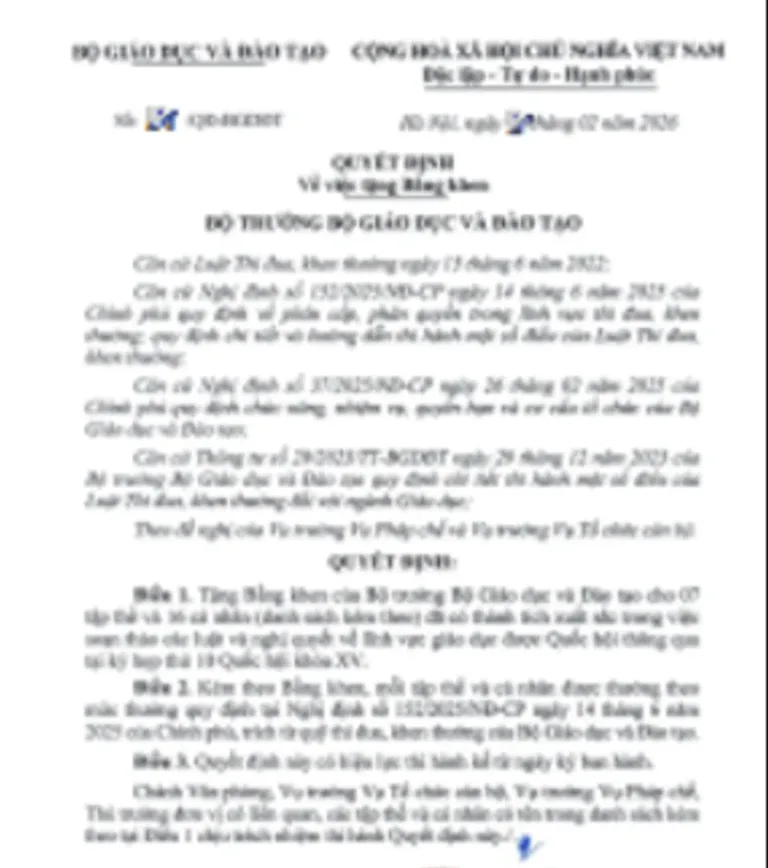
Together with our input to education law-making (recognised by the Ministry in 2026), these forums show the university is a trusted partner in policy dialogue. Alongside the carbon credit study, the next step is to expand policy research projects and reports with government on digital transformation, AI and the digital workforce, where our technology strengths can contribute most.
Conclusion: FPT University contributes research and expertise to policy-making (SDG 16)
From research on the carbon credit market and the seminar on commune-level education to the forum on AI ethics, our university is helping bring knowledge and practical experience into policy-making. And you, students who learn AI every day, are part of that story too.